How lab-grown diamonds are made
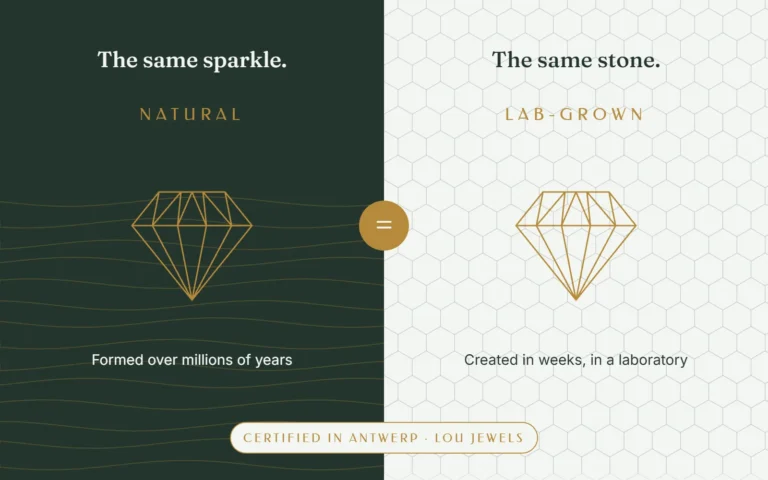
A lab-grown diamond is a real diamond: pure carbon, with the same crystal structure, the same hardness and the same sparkle as a natural diamond. The difference lies in its journey. Instead of forming deep inside the Earth over a billion years or more, it grows in a few weeks, in a laboratory that recreates the right conditions. In this article we explain how.
How a natural diamond is born
Natural diamonds formed around 150 kilometres below the surface, under enormous pressure and heat, a billion years ago or more. They reached the surface through ancient volcanic eruptions and are mined today.
Laboratories follow the same principle: giving carbon the right conditions to arrange itself into a diamond crystal. There are two main methods.
The HPHT method: high pressure, high temperature
The HPHT method (high pressure, high temperature) directly imitates conditions deep inside the Earth. A small diamond seed is placed in a press together with a carbon source, such as graphite.
- The press applies a pressure of more than 50,000 atmospheres.
- The temperature rises to around 1,300 to 1,600 °C.
- Molten metal helps dissolve the carbon, which settles on the seed, atom by atom.
- After a few days or weeks, a rough diamond crystal has formed.
The CVD method: growing layer by layer
In the CVD method (chemical vapour deposition), the diamond grows from a gas.
- Thin diamond plates act as seeds inside a vacuum chamber.
- The chamber is filled with a carbon-rich gas mixture, such as methane and hydrogen.
- Microwaves turn the gas into plasma, at around 800 to 1,000 °C.
- Carbon separates from the gas and builds up on the seed, layer by layer, over several weeks.
Some CVD diamonds then receive a heat treatment to improve their colour. This is a common step and is usually stated on the certificate.
From rough crystal to jewellery
When it leaves the laboratory, a lab-grown diamond is a rough crystal, just like a mined diamond. From here, the journey is the same: the cutter studies the stone, decides on the shape and cuts the facets that will give it its sparkle. As with natural diamonds, the quality of the cut makes all the difference.
Once cut, the diamond is graded on the same criteria of cut, colour, clarity and carat (see The 4 Cs of diamonds, simply explained) and receives a certificate stating its characteristics and origin. Many also carry a tiny laser inscription on the girdle, invisible to the naked eye, identifying the stone as lab-grown.
What changes and what does not
- The same: composition (pure carbon), hardness (10 on the Mohs scale, the maximum), sparkle and durability for everyday wear.
- Different: origin, formation time and rarity. For the same size and quality, a lab-grown diamond is generally more accessible.
- Telling them apart: impossible with the naked eye. Only a gemmological laboratory, with specialist equipment, can identify a stone’s origin.
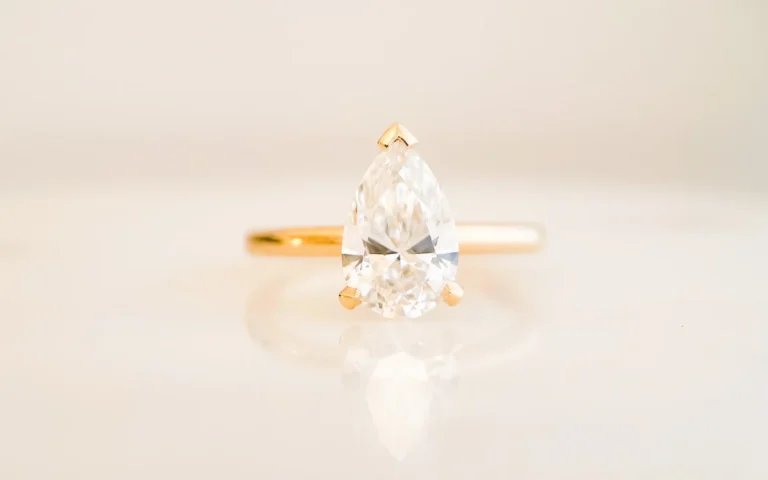
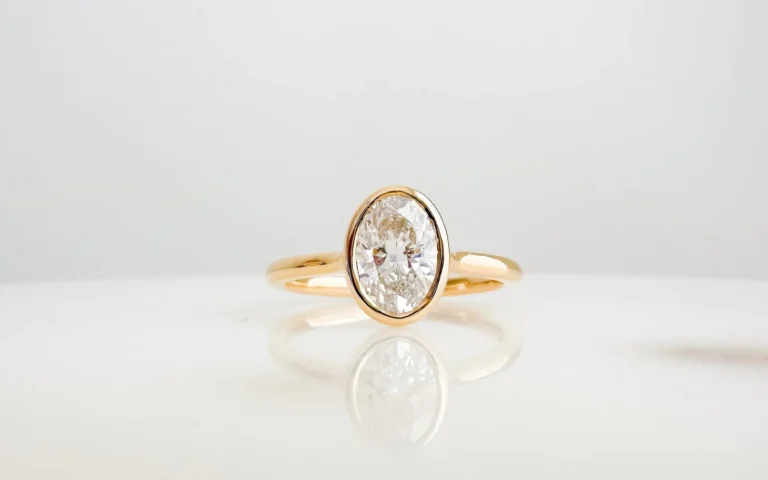
At LOU JEWELS, many designs are available with a natural or a lab-grown diamond, such as the PAULA, ISA and ELLIS solitaires. If you are still deciding, Natural or lab-grown diamond: which should you choose? compares the two side by side.
In short
- A lab-grown diamond is a real diamond, with the same composition and hardness as a natural one.
- There are two main methods: HPHT (high pressure, high temperature) and CVD (growth from a gas).
- The process takes weeks instead of a billion years.
- Cutting and grading on the 4 Cs are the same as for natural diamonds.
- The certificate states the stone’s characteristics and origin.
Get in touch
Would you like to know whether the piece you love comes with a natural or a lab-grown diamond? Message Daniel on WhatsApp (+351 962 939 931), in Portuguese, English, Flemish or French. See our pieces and latest arrivals on Instagram and Facebook.