The 4 Cs of diamonds, simply explained
When you choose a diamond, you will always hear about the 4 Cs. They are four criteria used worldwide to describe a stone: cut, colour, clarity and carat. Understanding what each one means helps you compare diamonds with confidence and put your budget where it makes the biggest difference.
1. Cut
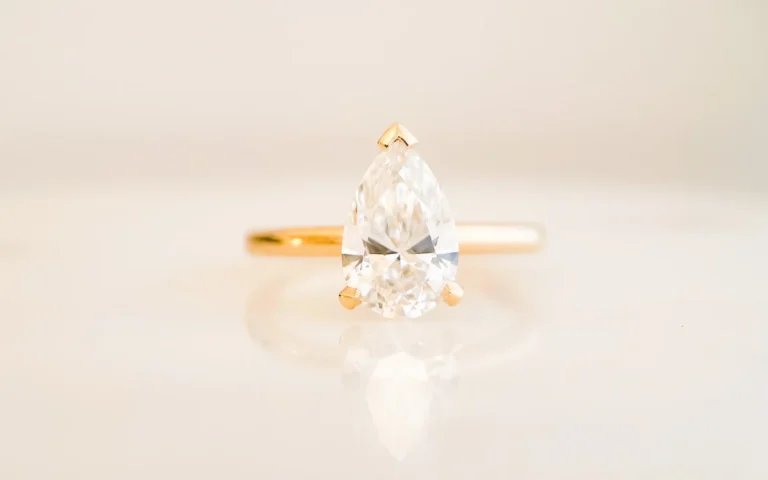
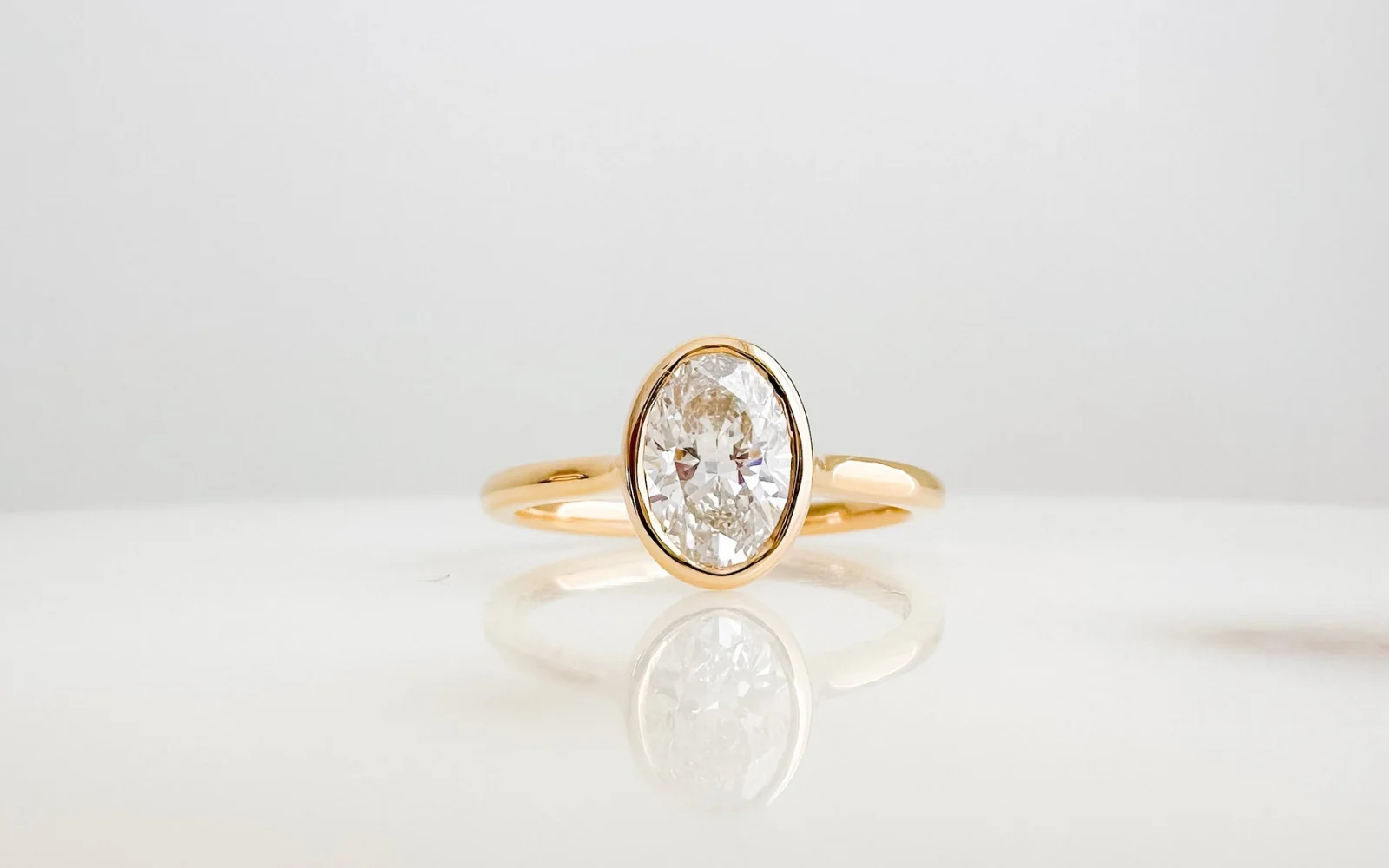
Cut is not the shape of the stone, such as round, oval or pear. It is the quality of the cutting: the proportions, the symmetry and the polish of the facets. Cut decides how light enters the diamond and comes back to your eye, as brilliance and flashes of colour.
That is why many experts see it as the most important of the four. A well-cut diamond looks livelier, and even larger, than a poorly cut stone of the same weight. Antwerp has been a world reference in diamond cutting for centuries, and it is the craft the Loots family has known for five generations.
2. Colour
In white diamonds, colour is graded by the absence of colour. The most widely used scale runs from D, completely colourless, to Z, with a light yellowish or brownish tint.
- D, E and F: colourless. The rarest.
- G, H, I and J: near colourless. To the naked eye the difference is hard to see, especially once the stone is set.
- K and beyond: a visible warm tint, which can look beautiful in yellow or rose gold.
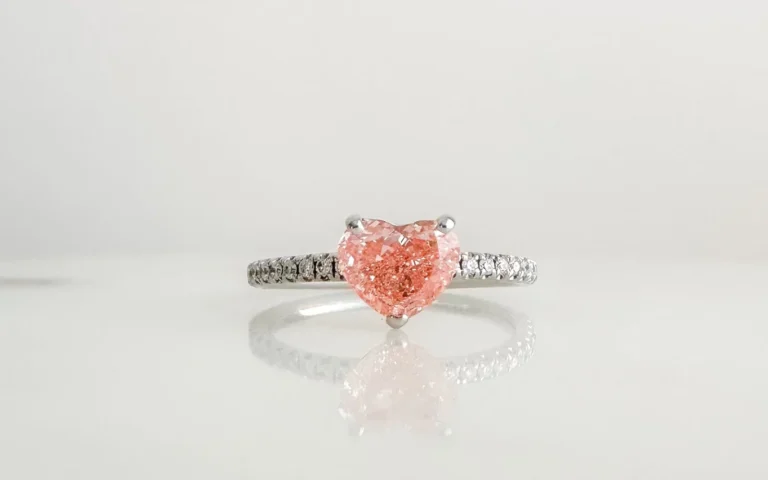
A tip: yellow and rose gold soften a slight warm tint, while white gold emphasises the absence of colour. Diamonds with an intense colour, such as a vivid pink or yellow, are graded differently: the more intense the colour, the rarer the stone.
3. Clarity
Almost every diamond has tiny internal marks, called inclusions, or marks on the surface. They work like a fingerprint. Clarity measures how many there are, how big they are and where they sit, as seen under a 10x loupe.
- FL and IF: no inclusions visible under the loupe. Very rare.
- VVS1 and VVS2: minute inclusions, hard to see even under the loupe.
- VS1 and VS2: very small inclusions. To the naked eye, the stone looks clean.
- SI1 and SI2: small inclusions, sometimes visible if you look closely.
- I1 to I3: inclusions visible to the naked eye.
For jewellery worn every day, VS is often the right balance: the stone looks clean and your budget is free for the other criteria.
4. Carat
Carat is a measure of weight, not size: 1 carat equals 0.2 grams. Two diamonds of the same weight can look different in size, depending on their cut and shape.
A diamond’s value tends to rise more sharply at round weights such as 0.50 or 1.00 carat. In the LOU JEWELS PAULA, ISA and ELLIS solitaires, for example, the centre diamond can be 0.70, 1.00, 1.50 or 2.00 carats.
How to balance the 4 Cs
There is no single perfect combination. There is the right combination for each person, each piece and each budget. This chart helps you decide where to start.
| Criterion | What it measures | In a nutshell |
|---|---|---|
| Cut | Proportions, symmetry and polish | Drives the sparkle. The last place to cut corners. |
| Colour | Absence of colour, from D to Z | In most jewellery, G or H already looks white once set. |
| Clarity | Inclusions, from FL to I3 | From VS upwards, the stone looks clean to the naked eye. |
| Carat | Weight: 1 carat = 0.2 g | Choose it once you have settled the other three. |
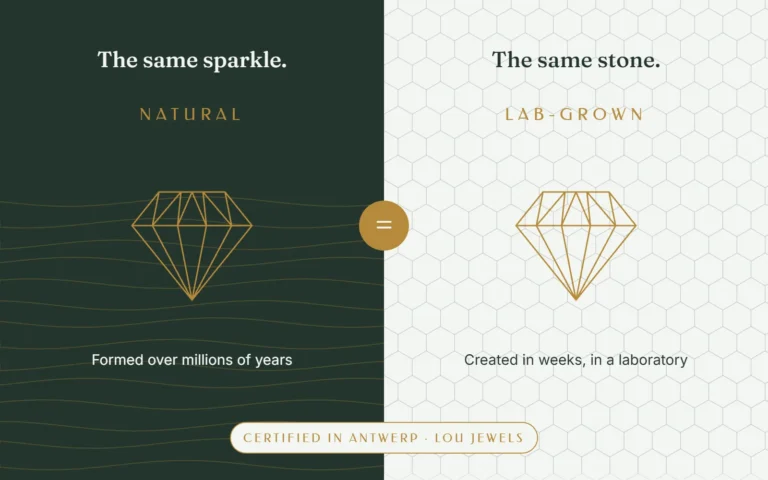
The 4 Cs apply in exactly the same way to natural and lab-grown diamonds. If you are still deciding between the two, read Natural or lab-grown diamond: which should you choose? Either way, the diamond’s certificate states these four characteristics: always ask for it.
In short
- The 4 Cs are cut, colour, clarity and carat.
- Cut drives the sparkle and is the last place to cut corners.
- Colour runs from D (colourless) to Z; G or H already look white once set.
- Clarity measures inclusions; from VS upwards, the stone looks clean to the naked eye.
- Carat is weight, not size: 1 carat = 0.2 grams.
Get in touch
Would you like to compare diamonds or find the best combination for your budget? Message Daniel on WhatsApp (+351 962 939 931), in Portuguese, English, Flemish or French. See our pieces and latest arrivals on Instagram and Facebook.